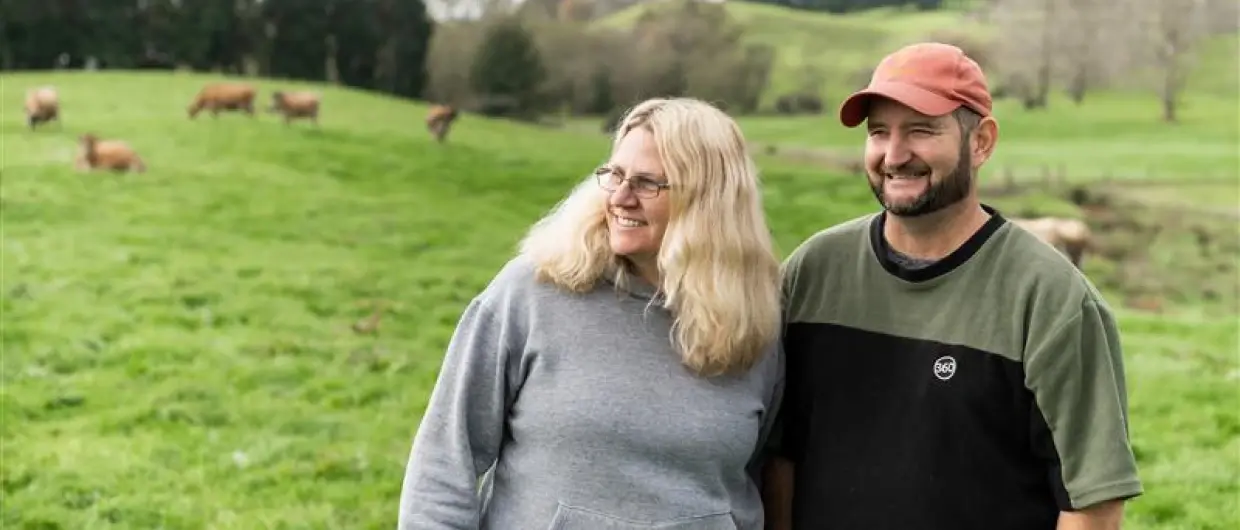
Chad and Jan Winke are totally sold on the advantages of automatic drafting of cows.
“We would never farm without a (auto drafting) gate anymore.” said Chad, a farm owner and sharemilker of two dairy operations near Morrinsville in the Waikato.
They have been using the Nedap cow control system for eight years now and appreciate the automatic drafting of cows every day on both their split-calving 200- cow high production farm and the 340-cow spring calving 50:50 sharemilking unit.
While they have the Nedap gate, they say the technology that drives the cow monitoring systems sold through Waikato Milking Systems and GEA and others in New Zealand all work with most drafting gates in the marketplace.
“Each milking a list of cows with alerts is sent to the gate and the cows are drafted seamlessly into a holding pen once they have been milked.”
The Winkes have their system set to send a push alert to the farmer with an ‘urgent’ health alert cows (those that have not been eating or ruminating for a period of time) and then draft the cow out at each milking, so that she can be assessed and treated with early intervention protocols.
A ‘significant’ alert is when the cow’s eating and rumination level is lowered a significant amount from her average – so she is still eating but ‘off her food’ a bit.
The ‘significant’ alert animals would be drafted out in the afternoon on their spring farm so that the team can sort the colostrums and new cows in the morning.
“We only have one holding pen on the spring farm so it’s easier on the team to be sorting health alerts in the afternoon – mornings are busy enough with cows coming out of the colostrum mob into the main milking mob.”
The system also drafts based on a number of pre-set filters, all of which are customisable – a task that Jan Winke trains and helps farmers with in her role as Application Support Specialist for Nedap.
“There is also a trend to keep cows in an early lactation group to milk them once-a- day (OAD) until rumination reaches a certain level,” says Jan.
“The system can easily group first calvers, second calvers, and give lists of cows to keep in different mobs.”
“Its also very flexible and you can set different parameters depending on what the farmer needs.”
The Nedap system is also constantly researching New Zealand data and refining the algorithms to enhance the software to be more responsive to grazing conditions and the Kiwi dairy system which is vastly different to Europe’s barn style dairy system where the feed and conditions tend to be very constant.
“New Zealand farms have varying levels of feed levels with different nutritional values, daily walking requirements and climatic conditions which all change on a daily basis – with corresponding changes to energy levels for high producing cows and therefore changes to eating and rumination,” Jan explained.
The Nedap system takes out the need for the staff to be making drafting decisions during milking, making it much easier for a busy team, potentially working at varying levels of experience.
“Nobody needs to be writing lists or looking at cows for drafting – the milkers just do the milking.”
“This season we are using the drafting gate to separate the calved cows, as we whip away new calves and then put the springer mob through the shed each day - the calved cows are drafted off and the whole springer mob gets a special springer blend of supplement in the shed.”
“All the cows get used to going through the shed and getting the ration so first calvers are easy to load and row up.”
To identify springers, the dry cow mob is put through the shed once a week and springers are drafted out 14-18 days before their expected date of calving, based on their insemination date, so they have the special ration blend for 16 days.
Feeding in the shed is easier for the staff and more accurate than feeding in trailers in the paddock, says Chad.
“Performance-wise we get very few milk fever cows because of the metabolic support they get from the springer ration.”
At the other end of the lactation, the automatic drafting system has made a dramatic change to the drying-off process, maximising the lactation length and resulting in more milk in the vat.
“We dry off in small groups by the expected date of calving, so the cows all get 55- 60 days dry, and the system drafts them out each week to dry-off,” Chad explains.
On the spring farm, the list is reported depending on parameters set from the milk production data from the last herd test.
“The list of cows to dry-off goes to the autodrafter and because they are small groups, it’s a one person job and much easier and less stressful for the team and for the cows.”
“Then after drying-off the collars monitor them closely for any health issues – for example metabolic milk fever sometimes pops up.”
Additional savings come from not having to scan the whole herd for pregnancy.
“Because the system is watching each cow, we know if she’s mated and stops coming on heat she is probably pregnant – there are sometimes a small number of cows with something funny going on so we scan them.”
“And on the spring farm we get the vet to come and scan anything we felt was not pregnant – just to confirm – as we don’t want to accidentally cull any cow that is actually pregnant.”
“Plus before drying off if a cow has slipped and started to show activity we will get her scanned and confirm she has lost the pregnancy so we can keep milking her.”