Transitioning cows through the crucial pre calving to post calving period in the lactation cycle is a key time to make proactive decisions to maximise herd health and ensure optimum mating for the following season.
Using accurate data to assess what’s happening on farm during this period is made easy with the launch of Nedap’s new Transition Monitoring feature.
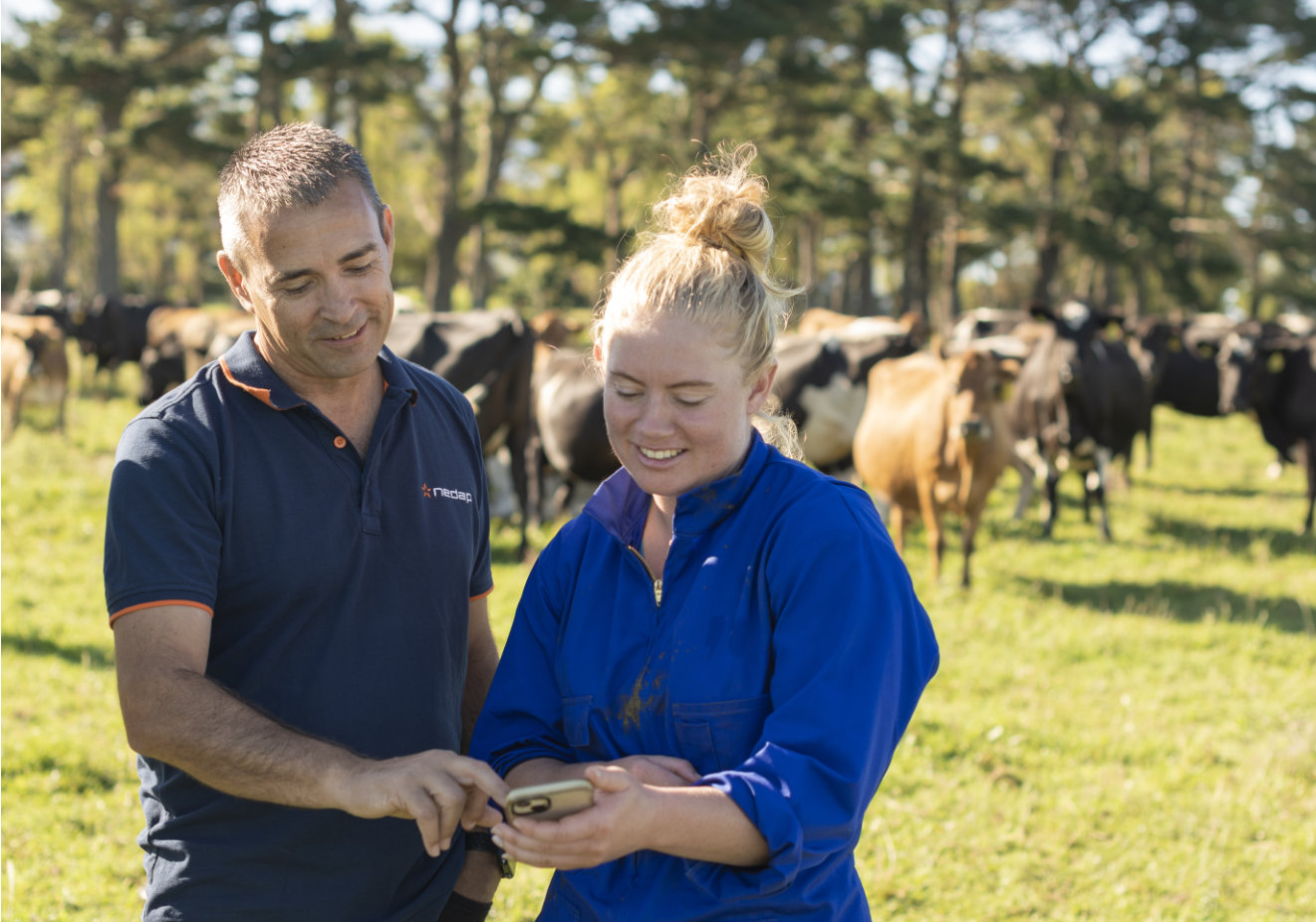
Nedap’s Applications Support Manager Oceania and global grazing specialist, Jan Winke, is also a dairy farmer. Jan and her husband own a dairy farm at Walton, in the Waikato, and have been using cow collars and utilising the data collected for approaching 10 years. She’s excited about the opportunities the Transition Monitoring feature provides.
Winke explains the transition period is ultimately defined as the time leading up to calving, and the time post-calving.

A cow is at her most vulnerable at calving, her immune system is lower and she’s recovering from a huge change in her body after having a calf. This is one of the most critical times to monitor the cow and provide her with the best care possible.
“As farmers, we are calving cows and already looking forward to the mating period, getting them back in calf successfully. The cow needs the best environment to transition post-calving into cycling and being ready to get pregnant again.”
That’s why it’s so important to have the right information, knowing if cows are showing a decline, to take action and get them back to optimal health, so they have the best chance of getting in-calf again, at the right time.
Winke points to research in New Zealand around the benefits of milking cows post-calving once a day until they reach a certain health level and are able to move to the herd milking twice a day. Rumination and energy are key indicators a cow is ready to move to twice a day, and that’s where Transition Monitoring delivers valuable insight.
“Rumination minutes can vary and this depends on diet. It’s important to know where your herd is in terms of rumination levels, to see how the herd is tracking post-calving.”
Knowledge is power, and Transition Monitoring offers the ability to benchmark where the whole herd is, and use that information to make changes or improvements at a management level.
“This tool gives all the information from the calving period and is easily split into early, mid and late calvers. If a farmer realises there is a problem, they may make changes to springers before they calve.”
The key metrics provided by Transition Monitoring are rumination time and eating time. Other Key Performance Indicators (KPIs) include number of urgent attentions, average days to first heat, cycling rate and number of cows leaving the herd after the first 40 days.
Information is archived and able to be revisited, meaning it’s easy to compare seasons and identify trends, or determine if any changes implemented have had a positive effect.
Winke says there are two things a typical New Zealand farmer can change or control as a result of Transition Monitoring. The first is modifying management of springers. This could include changes in diet, adding supplement or minerals. The second is knowing when to keep cows on once a day milking post-calving. This means a cow can put her energy into healing and recovery, rather than trying to hit peak milk production as soon as possible.
This is about bigger picture thinking and considering how the mating season sets you up for the next milking season. It’s a marathon not a sprint, and Winke encourages farmers to think long-term. “If you have a bad mating season and struggle to get cows in calf you will have later calvers, less days in milk, less milk production, which impacts the bottom line.”
Transition Monitoring is also useful during the dry-off period, especially if cows are sent off to winter crop and undergoing a significant change in diet.
“You can monitor how they are transitioning onto a new crop or feed. Some crops require slower transition to avoid negative health effects. This enables you to transition in an appropriate way, making sure you’re not giving them too much, too quickly.”
She emphasises the data created from Transition Monitoring gives farmers an opportunity to work with their trusted team, vets and consultants.
The value is in using the information to benchmark where they are at, figure out where they want to be, and make appropriate changes with the help of a professional who knows the farm and the cows.
Currently, Transition Monitoring provides insights at a whole herd level and identifying group trends, but Nedap will soon allow farmers to pinpoint individual animals, elevating the feature further.
“Nedap will start ranking individual cows in the transition period. Offering individual animal transition information gives the ability to identify cows having a problem pre-calving that may be at risk. We can bring her in and make changes that can change her outcome at calving for the better.”
Identifying high risk cows gives farmers the power to intervene and make changes before it becomes a problem.
“If we have the information to monitor cows at their most vulnerable time, at a herd level and an individual level, we can make informed decisions about the health of the herd, as well as picking out individual problem cows.”