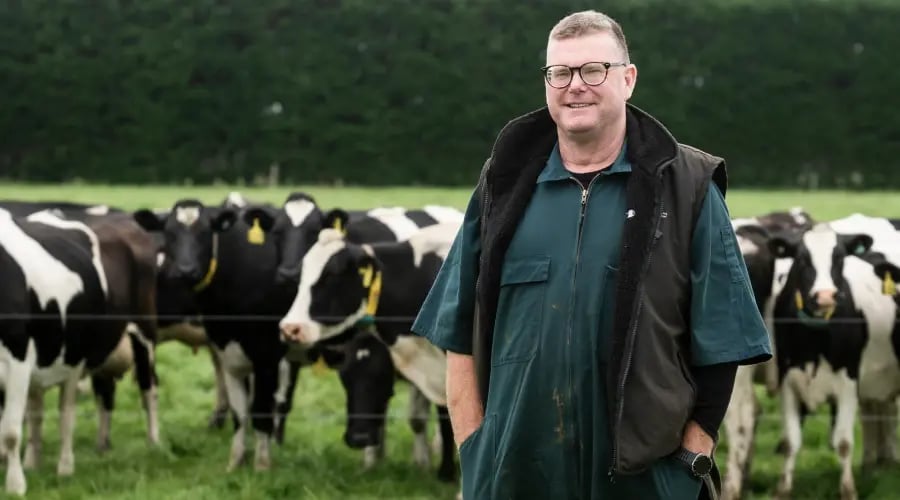
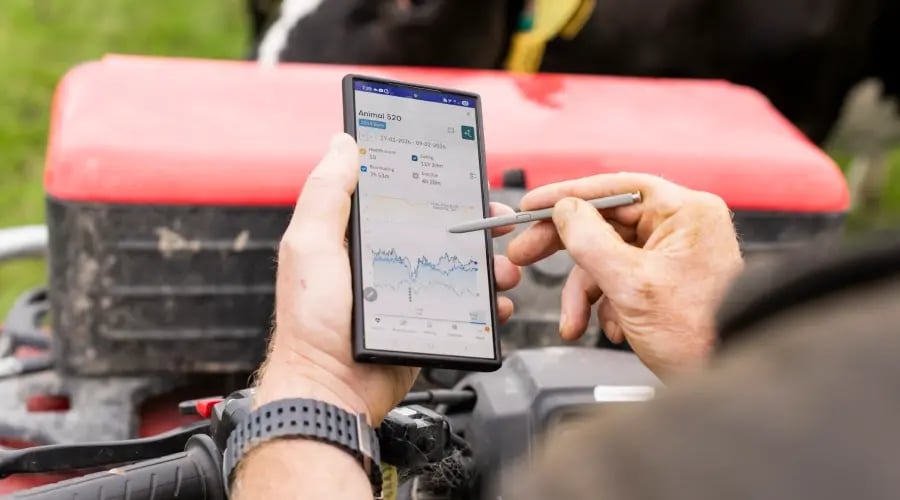
What has evolved more noticeably is how Craig is now using that system. As he puts it, the upgrade to Nedap’s app has been “an absolute gamechanger”, particularly in how easily he and his team can interact with the data they’re collecting.
Like many farmers, Craig acknowledges that moving from no collars to collars brings a shift. It introduces a level of insight that hasn’t traditionally been available, and with that comes a learning curve. What has improved is how accessible and practical that insight has become.
Where he once had to organise groups in MINDA and copy them across, he explains that “the new filtering tools allow me to do that directly in the program, bypassing MINDA altogether”.
The same applies to reporting. Rather than data sitting in the background, Craig says “with filtering, I can customise reports to see what I like”, giving him direct access to the information that matters most.
Even when MINDA is still part of the process, the workflow is more efficient. Being able to export a CSV and import it straight into Nedap as a list is, in his words, “a huge time saver”.
That shift from simply having data, to actively using it, is where Craig sees the biggest difference. Being able to pull reports with the information he wants has allowed him to become “a data-driven farmer, rather than relying on guesswork”.
The impact of that is most obvious in animal health. Instead of relying solely on observation, Craig and his team are getting earlier signals when something is not quite right. He notes that it improves animal welfare, with early detection picking up animals “a good day before we might pick them up by eye”.